Built-In Appliance Installation vs. Standard Installations: What’s the Difference?
A Simple Guide to Choosing the Right Installation for Your Home
When purchasing a new appliance, many homeowners focus on brand, features, and appearance, but overlook a critical factor: how the appliance is installed. The difference between built-in appliance installation and standard installation is more significant than it may appear. Each approach involves distinct requirements, challenges, and long-term considerations.
Understanding these differences helps homeowners make informed decisions that protect their kitchens, appliances, and budgets. In Manchester, Missouri, where homes range from older construction to newly remodeled properties, choosing the right installation method is especially important.
This guide explains what separates built-in appliance installation from standard installations, why built-in installations require specialized expertise, and how professional installation ensures a seamless result.
What Is a Standard Appliance Installation?
Standard appliance installation typically applies to freestanding appliances that are designed to slide into an open space without being permanently integrated into cabinetry. Common examples include freestanding ranges, dishwashers installed under standard countertops, and standalone refrigerators.
These appliances are manufactured to fit within general size ranges, making them easier to replace without modifying surrounding structures. Standard installations usually involve connecting existing plumbing, electrical, or gas lines and ensuring the appliance is level and secure.
While standard installations are generally simpler than built-in projects, they still require careful attention to safety, alignment, and manufacturer specifications.
What Is Built-In Appliance Installation?
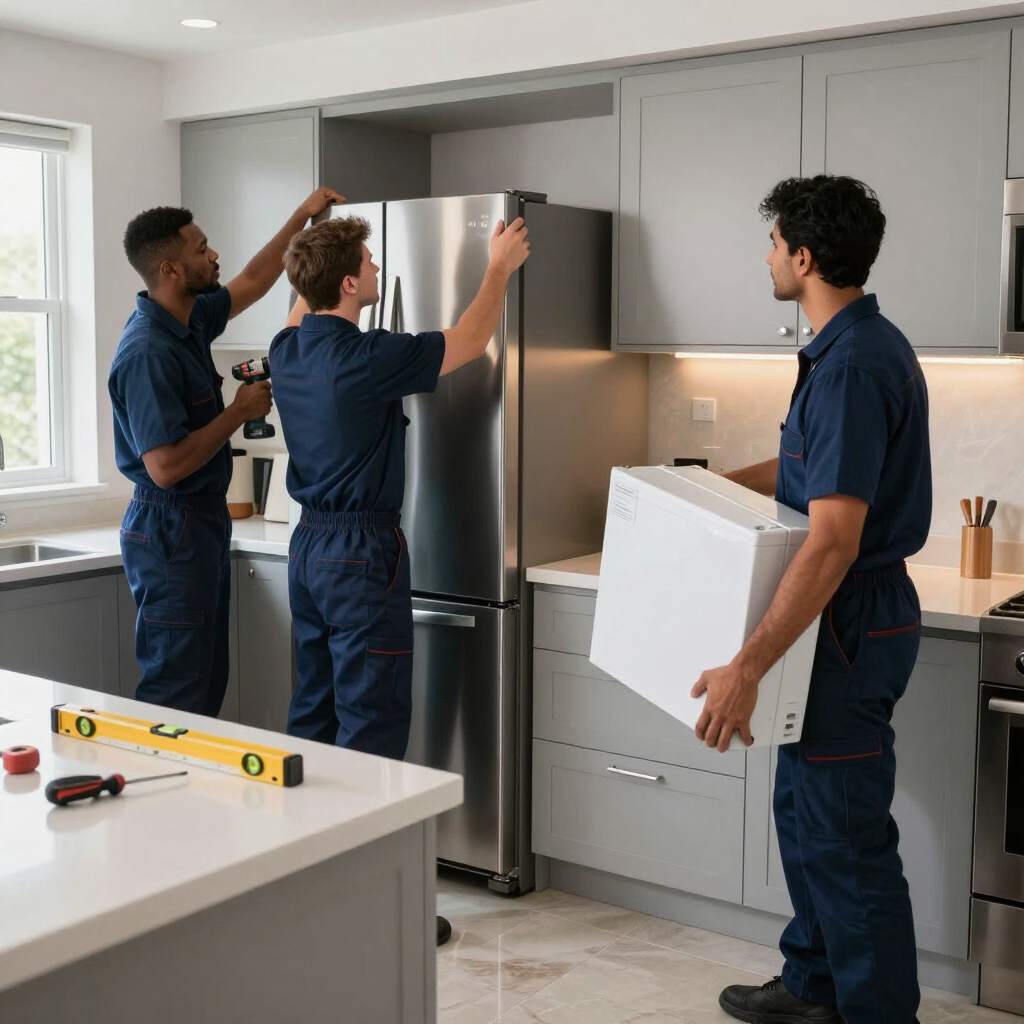
Built-in appliance installation involves integrating an appliance directly into cabinetry or surrounding structures so that it appears flush with the kitchen design. Built-in dishwashers, wall ovens, built-in microwaves, and integrated refrigerators fall into this category.
These installations require precise measurements, structural support, and often custom cabinet modifications. Built-in appliances are not designed to be swapped out easily without adjustments, making proper installation critical from the start.
A built-in appliance should look like a natural part of the kitchen, with clean lines and no visible gaps. Achieving this result requires experience and precision.
Key Differences in Measurement and Fit
One of the most significant differences between built-in and standard installations is the margin for error. Standard appliances allow for minor variations in opening size because they are not permanently enclosed.
Built-in appliances, however, must fit exactly. Even small measurement errors can prevent the appliance from fitting or functioning correctly. Cabinet openings must be square, level, and sized precisely according to manufacturer specifications.
Professional installers measure not only width and height but also depth, ventilation clearances, and door swing requirements. This level of detail ensures that the appliance fits properly without compromising performance or appearance.
Cabinet Modifications and Structural Support
Standard installations rarely require cabinet modifications beyond basic adjustments. Built-in installations often do. Cabinets may need reinforcement to support the weight of wall ovens or built-in microwaves. Dishwasher openings may require trimming or shimming to achieve a flush fit.
In some cases, cabinetry must be modified to allow for proper ventilation or access to utilities. These modifications must be done carefully to avoid weakening cabinet structures or damaging finishes.
Professional installers have the skills and tools to make these adjustments cleanly and safely.
Electrical and Plumbing Considerations
Both built-in and standard installations require proper utility connections, but built-in appliances often involve more complex setups. Wall ovens and built-in cooktops may require dedicated electrical circuits or hardwired connections.
Built-in dishwashers may require relocated plumbing or customized drain routing to accommodate cabinet layouts. These changes must meet safety standards and manufacturer guidelines.
Improper utility connections are one of the leading causes of appliance failure and safety hazards. Professional installers ensure that all connections are secure, compliant, and tested before use.
Ventilation Requirements
Ventilation is another key area where built-in installations differ from standard ones. Built-in appliances often rely on specific ventilation clearances to dissipate heat. Inadequate ventilation can lead to overheating, reduced efficiency, and shortened appliance lifespan.
Standard appliances typically have more flexibility in airflow due to their freestanding design. Built-in appliances require careful planning to ensure heat escapes safely without damaging cabinets or surrounding materials.
Professional installation accounts for these requirements to protect both the appliance and the kitchen.
Long-Term Maintenance and Replacement
Standard appliances are generally easier to replace. When an appliance fails or becomes outdated, it can often be removed and replaced with minimal effort.
Built-in appliances are more complex to replace because they are integrated into the kitchen design. Improper initial installation can make future replacements difficult or require additional cabinet modifications.
By ensuring proper installation from the beginning, homeowners reduce the risk of costly adjustments later.
Aesthetic Impact and Property Value
Built-in appliances are often chosen for their sleek appearance and high-end look. When installed correctly, they enhance the overall design of the kitchen and can contribute to increased property value.
Poorly installed built-in appliances, however, have the opposite effect. Gaps, misalignment, and uneven finishes detract from the kitchen’s appearance and may raise concerns during home inspections.
Professional installation ensures that built-in appliances complement the kitchen design rather than detract from it.
Common Problems with Improper Built-In Installation
Improper built-in installation can lead to a range of issues, including:
- Appliances that do not sit flush with cabinetry
- Overheating due to poor ventilation
- Difficulty opening doors or drawers
- Structural damage to cabinets
- Voided manufacturer warranties
These problems are often expensive to fix and may require reinstalling the appliance entirely.
Why Professional Experience Matters
Built-in appliance installation requires a higher level of expertise than standard installations. Precision, planning, and problem-solving are essential.
Adept Installation brings decades of hands-on experience to both built-in and standard appliance installations in Manchester, Missouri. Their ability to handle cabinet modifications, electrical adjustments, and plumbing coordination ensures that each installation meets the highest standards.
This experience is particularly valuable in older homes or kitchens with custom layouts.
Frequently Asked Questions
Are built-in appliances more expensive to install?
Yes, built-in installations typically require more labor and customization, which increases installation costs.
Can any kitchen support built-in appliances?
Not always. Cabinet structure, available space, and utility access must be evaluated before installation.
Do built-in appliances last longer?
Longevity depends on proper installation and maintenance. Correct installation helps maximize lifespan.
Is professional installation necessary for built-in appliances?
Professional installation is strongly recommended due to the complexity and precision required.
Choosing the Right Installation for Your Kitchen
Choosing between built-in and standard appliances depends on your kitchen design, budget, and long-term plans. Understanding the differences helps homeowners avoid surprises and make informed decisions.
Whether upgrading a single appliance or planning a full kitchen renovation, proper installation is essential for safety, performance, and appearance.
Adept Installation serves Manchester, Missouri and surrounding communities during regular business hours, providing expert appliance installation services tailored to each home.
Phone:
(314) 303-3288
Email:
jrcxtreme@gmail.com
Recent Posts